- FAAN sparks Next-Gen interest with NYSC, high school aviation career programme
- FAAN targets seamless travel at MMIA with Biometric gates, digital upgrades
- United Nigeria Airlines headlines 2026 Ndigboamaka traders cup
- How market dynamics made flying accessible again
- Minister: Competition, increased seat capacity driving down airfares



Dangerous Game: Overwritten cockpit recorders, threat to air safety
The ‘overwriting’ of flight data recorder (FDR) is an insidious operational vulnerability that has continued to compromise global aviation safety, writes WOLE SHADARE
In the delicate architecture of modern commercial aviation, trust is anchored to a small, brightly painted orange cylinder buried in the tail section of an aircraft: the Cockpit Voice Recorder (CVR).

For decades, this crash-survivable device, colloquially called the black box, has served as the ultimate arbiter of truth.
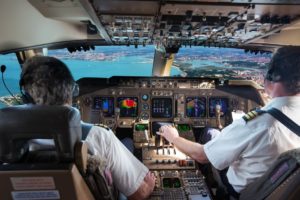
It captures ambient sounds, flight deck alarms, mechanical clicks, and, most crucially, the exact words, tone, and decision-making of pilots in their most critical moments.
Yet, an alarming pattern has emerged across global aviation and is increasingly on the radar of domestic regulators: the failure to preserve CVR data after serious air incidents, resulting in vital recordings being permanently overwritten.
What operators often attempt to dismiss as procedural oversight or post-incident confusion is increasingly viewed by safety experts and air crash investigators as a reckless, near-criminal compromise of aviation safety.
The anatomy of an erasure
Standard legacy Cockpit Voice Recorders operate on a continuous-loop recording, capturing between 2 and 25 hours of high-fidelity audio before overwriting the oldest data.
In high-speed, routine operations, this rolling memory is seamless. However, when an aircraft experiences an emergency, runway excursion, severe turbulence, or near-miss collision, time becomes the enemy of truth.
Under International Civil Aviation Organisation (ICAO) Annex 13 standards and domestic civil aviation regulations, such as the Nigerian Civil Aviation Regulations (Nig-CARs) Parts 7.8 and 8.5, flight crews are strictly mandated to deactivate and preserve flight recorders immediately upon engine shutdown following an accident or serious incident.
Preserving the recorder is straightforward: flight crews or maintenance engineers must pull the CVR circuit breaker to cut electrical power.
When an aircraft lands safely after a severe incident, but the engines or auxiliary power units (APU) are left running, or the aircraft is quickly dispatched on a subsequent revenue flight without securing the box, the evidence vanishes.
Within 120 minutes of electrical power being restored, the tense dialogue, system callouts, and human factors that led to the incident are scrubbed clean.
Investigative nightmare
When investigators from agencies such as the Nigerian Safety Investigation Bureau (NSIB) or the U.S. National Transportation Safety Board (NTSB) arrive at the scene of an occurrence, retrieving an empty or overwritten CVR can be catastrophic.
Flight Data Recorders (FDRs) provide telemetry data, including altitude, pitch, throttle position, and rudder deflection. But telemetry only reveals what the aircraft did; it cannot explain why the crew took those actions.
When high-profile occurrences such as the Boeing 737 MAX 9 door-plug blowout, in which the National Transportation Safety Board (NTSB) found the CVR had been overwritten before being pulled, occur alongside domestic runway excursions in which recorders are similarly wiped, the integrity of the entire safety oversight apparatus is undermined.
Threat of criminality
The aviation industry operates on a foundation known as “Just Culture,” where honest mistakes and safety hazards can be reported without fear of retribution. However, intentional destruction of evidence or willful neglect sits entirely outside of Just Culture protections.
Airlines and pilots face intense commercial and reputational pressure following an incident. Grounding an aircraft disrupts schedules, and adverse findings can result in heavy regulatory fines, surging insurance premiums, and pilot license suspensions.
When a black box is allowed to be overwritten, it inevitably fuels suspicion of deliberate sabotage intended to shield flight crews or operators from accountability.
Regulators are signalling that patience has worn thin. The Nigerian Civil Aviation Authority (NCAA) and the NSIB have issued stern All Operators’ Letters (AOLs) and enforcement warnings, confirming that deliberate or grossly negligent overwriting of recorders will no longer be treated as administrative lapses.
Regulatory bodies globally are pursuing license revocations, carrier sanctions, and exploring criminal referrals for obstruction of official safety investigations.
The Director-General of the Nigerian Safety Investigation Bureau (NSIB), Capt. Alex Badeh Jr., recently expressed concern over the prevalence of overwritten black boxes in the country’s aviation industry.
He revealed that the pilot of a Bombardier Challenger 601 private jet, operated by VMO Aero, intentionally overwrote the aircraft’s Flight Data Recorder (FDR) after a botched landing attempt at Asaba Airport, Delta State.
The incident, which occurred on July 10, 2026, saw the business jet miss the airport runway and land instead on a parallel concrete road in Ogwashi-Uku, a bizarre manoeuvre that sparked widespread suspicion regarding the crew’s intent and operational conduct.
Speaking during a virtual media briefing on Friday, the Director-General of the NSIB, Captain Alex Badeh Jr., disclosed that the pilot flew the aircraft back to Lagos without clearance from Air Traffic Control (ATC), deliberately running the system to wipe the flight’s critical performance logs.
“It was discovered that the pilot who flew that aircraft overwrote the black boxes by the time he flew to Lagos. Everything that happened was overwritten. We are still investigating, but some of the data was destroyed,” Badeh stated.
The NSIB boss warned that the deliberate destruction and altering of flight data has become a troubling habit among pilots seeking to conceal errors from safety investigators.
He attributed this obstructive behaviour to a prevailing culture of fear within the industry.
“The crew don’t trust NSIB; they are scared of losing their jobs. It is a major problem we are dealing with. We do not recommend punitive sanctions, and we constantly assure crew members that nobody should be penalised for telling the truth.”
Beyond operational hazards, Badeh raised an alarm over a looming financial squeeze that threatens safety investigations across the country.
Path to structural reform
Ending this systemic vulnerability requires technical mandates and stricter operational discipline mandating 25-Hour CVRs across the board.
While Europe (EASA) and new ICAO standards have pushed for 25-hour CVR retrofits, older regional fleets still rely on 2-hour loops. Mandating 25-hour recorders for all commercial transport-category aircraft drastically reduces accidental overwriting.
Equally important is that aircraft manufacturers must incorporate automated logic that isolates and shuts off power to CVR systems automatically upon the activation of emergency slide deployment, gear collapse sensors, or severe impact parameters and the demand that operators must integrate CVR preservation into non-normal and emergency checklist protocols, making circuit breaker tripping an immediate, unskippable memory item once an aircraft clears active runways after an incident.
More importantly, regulators must hold airline management and chief pilots directly accountable, imposing heavy civil penalties if an aircraft under investigation is returned to service before the recorder is retrieved.
Last line

Aviation safety has achieved its historic safety record because the industry treats every incident as a priceless lesson written in blood and metal. Allowing the black box to be silenced, whether by design or gross indifference, is an unacceptable gamble with passenger lives that the global aviation community cannot afford to tolerate.
Google+